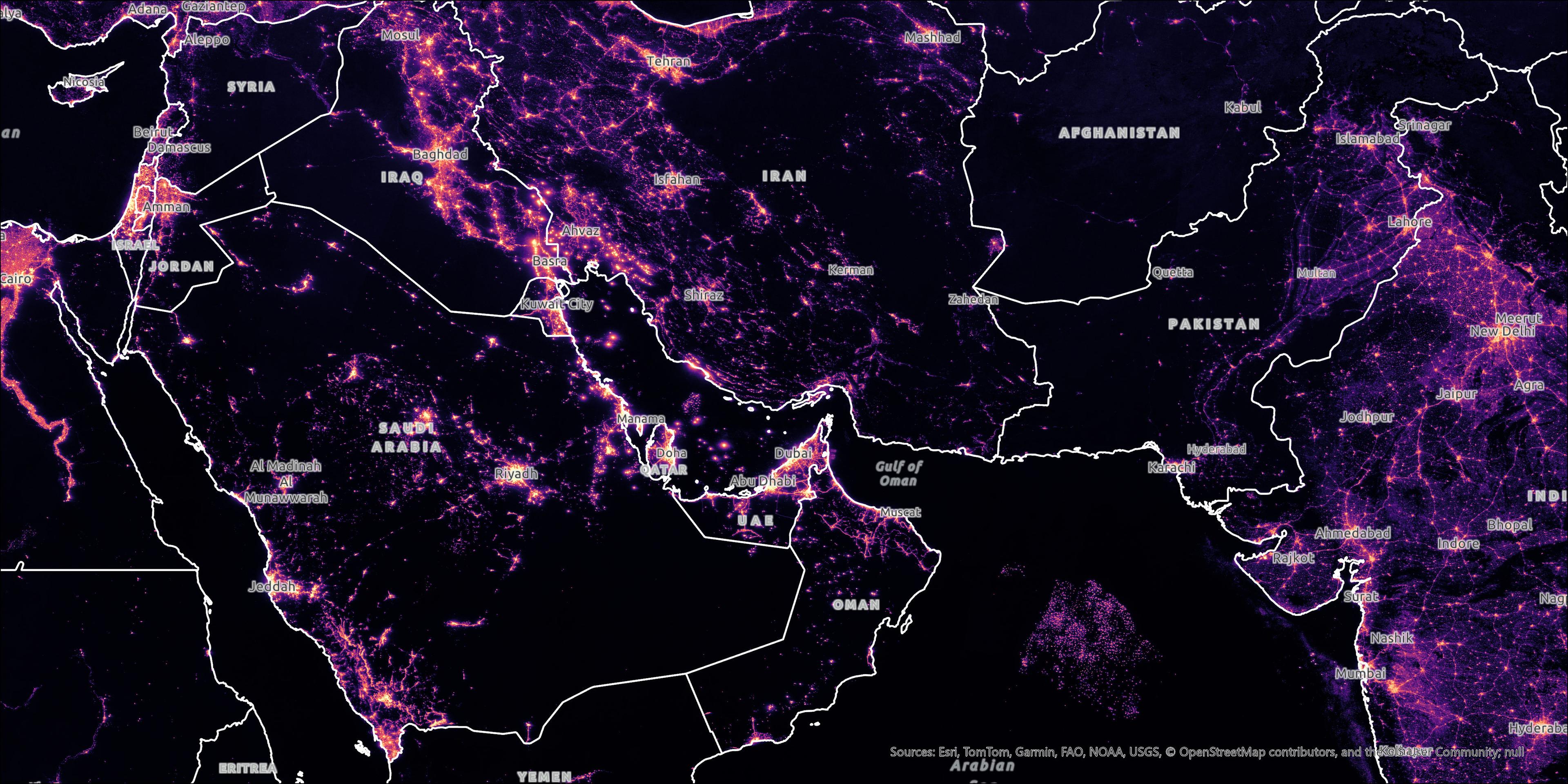
On February 28, 2026, coordinated attacks launched by the United States and Israel against Iranian cities (such as Tehran, Isfahan, Qom, Karaj, and Kermanshah) quickly transformed the Gulf region into a broad conflict zone. Iran's retaliatory strategy expanded beyond military targets to include energy lines, trade corridors, ports, airports, and digital infrastructure. This escalation pushed the situation beyond a mere security crisis, triggering a severe geoeconomic shock that directly threatens the continuity of the model built by the Gulf countries on economic stability.
Economic infrastructure has become a direct target, and the disruption of trade and logistics activities in the Gulf has created deep structural tremors, especially in the key hubs focused on sectors such as finance, logistics, and aviation. The region's historical guarantee of safety has been replaced by a heavy risk burden, driven by soaring security costs, operational uncertainties, logistical bottlenecks, and direct threats to life and capital. Consequently, this transformation has forced a reassessment of regional economic balances and the long-term sustainability of these economic centers.
Reflections of the War on Dubai's Economy
The degree of this shock in the region has become evident from the early days. More than 500 ballistic missiles and over 1,500 drones were used in the first six days, bringing the total number of attacks against seven Arab countries to 5,471 by the end of March (Ribe & Murad, 2026; Yeni Şafak, 2026; Al Jazeera Staff, 2026). Approximately 43% of the total attacks targeted the United Arab Emirates (UAE). As of March 30, 2026, the volume of attacks directed against the country reached a total of 2,343 munitions, including 414 ballistic missiles, 15 cruise missiles, and 1,914 drones. In the same period, the level of attacks suffered by other Gulf countries such as Saudi Arabia, Kuwait, and Bahrain remained significantly lower. On the first day of the conflict alone, 346 munitions (137 ballistic missiles and 209 drones) targeted Dubai, explicitly highlighting the city as a primary objective.
You may read evaluation note from here.