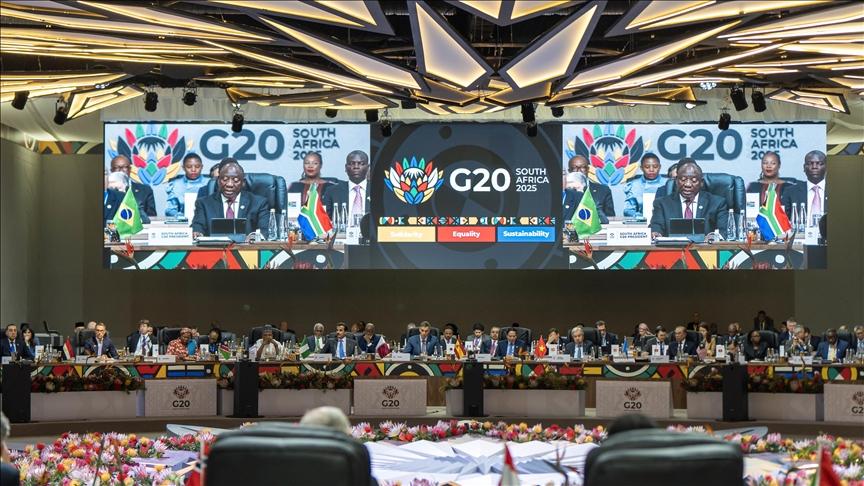
The G20 Summit took place on 22–23 November 2025 in Johannesburg, South Africa, marking the first occasion in G20 history that the summit was held on the African continent. This meeting also concluded the first twenty-year cycle of the G20. Over the past four years, countries from the Global South have consecutively hosted the summit and have exerted considerable influence on shaping its agenda. With the United States scheduled to assume the presidency in the following year—and in light of President Trump’s policy orientations—the 2026 G20 process is anticipated to involve notable developments.
The 2025 G20 Summit also marked the conclusion of the Global South group’s four-year consecutive presidency, encompassing Indonesia, India, Brazil, and South Africa. Convened within a context characterized by geopolitical fractures, conflicts, and escalating strategic competition—factors that have exacerbated global instability—the summit under South Africa’s stewardship culminated in the Leaders’ Declaration, formally endorsed by all participating states, except for the U.S. and Argentina.
In line with established practice, the G20 presidency is tasked with articulating clearly defined priorities for the annual agenda. The 2025 summit’s historical significance as the first to be held on the African continent, combined with South Africa’s intention to leverage the presidency to highlight the continent’s enduring developmental challenges, shaped both the preparatory process over the year and the final Declaration. Nonetheless, no presidency entirely diverges from the agenda items established in preceding years; issues of global significance that require sustained multilateral cooperation continue to occupy a central place. In this regard, the Declaration makes extensive reference to previously established principles, action plans, communiqués, and consensus-based outcomes.
Against this backdrop, South Africa sought to guide the 2025 G20 agenda under the overarching theme of “Solidarity, Equality, and Sustainability,” emphasizing four primary priorities.
You may read evaluation note from here.