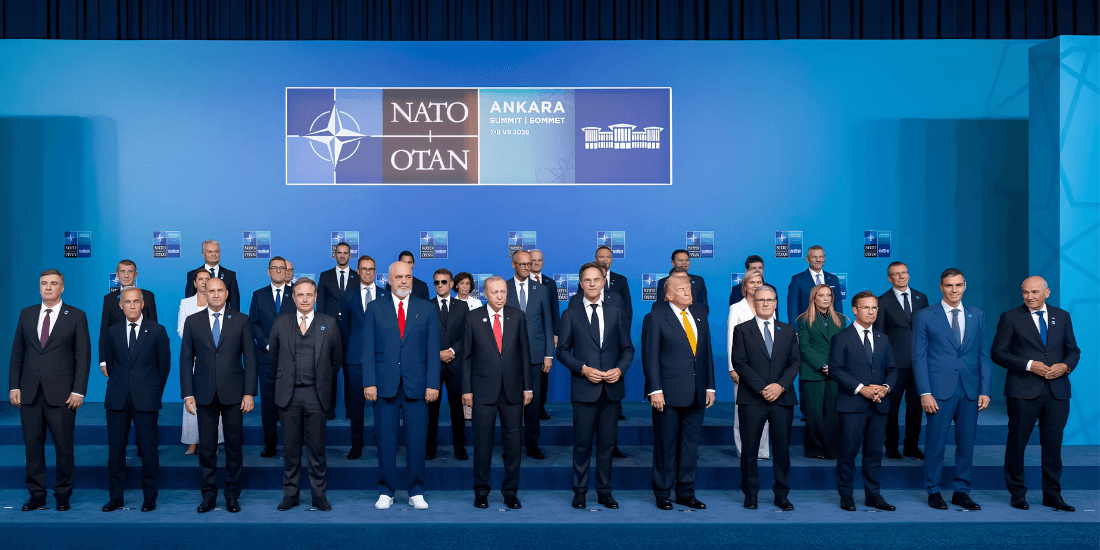
The NATO Summit held in Ankara on 7–8 July 2026 served as a major diplomatic platform with important implications for Türkiye’s position within the Alliance and the future course of Türkiye–US defense relations. Bringing together the heads of state and government of all 32 NATO members, the summit marked more than just Türkiye's second time hosting a NATO summit, following the 2004 Istanbul Summit. It also reflected a broader moment in which both the evolving security architecture and Türkiye's strategic role within it were being reassessed (NATO, 2026d; Reuters, 2026c).
The 22-year period between the Istanbul and Ankara summits illustrates the profound transformation of NATO’s security agenda. The 2026 Ankara Summit took place at a time when the Russia–Ukraine war was continuing, tensions in the Middle East were escalating, and debates over burden-sharing among allies were intensifying (Kibaroğlu, 2025; Reuters, 2026i). Coming immediately after the United States launched a large-scale attack on Iran, the summit also became a platform where both external security threats and internal divisions within the Alliance became more visible (CNN, 2026; France 24, 2026).
For Türkiye, the Ankara Summit was less a meeting expected to produce immediate results than a platform for medium-term negotiations on critical issues such as the F-35/CAATSA dispute, engine procurement for the KAAN fighter aircraft, restrictions on the defense industry, counterterrorism, and Black Sea security. The summit's lasting impact will therefore depend less on the diplomatic visibility generated by hosting the event than on whether it leads to concrete, time-bound, and measurable progress in these areas.
From NATO’s perspective, the summit’s main priorities were increasing defense spending, strengthening defense-industrial capacity, maintaining support for Ukraine, and reinforcing the Alliance’s 360-degree approach to deterrence. For Türkiye, the main agenda items included the defense and security issues outlined above, with particular emphasis on the future of the F-35 and the CAATSA process. In this regard, the S-400 issue, the CAATSA sanctions currently in force, and the position of the US Congress remain decisive.
You may read evaluation note from here.