
Nearly four years have passed since Russia launched its full-scale invasion of Ukraine in 2022. Over that period, the Black Sea has evolved from a secondary theatre of war into a central arena where energy security, trade routes, maritime law, military deterrence, and diplomacy converge. What was once a regional body of water is now a focal point of global strategic competition.
Recent events underline this shift. Ukraine’s use of unmanned maritime systems to sink two oil tankers linked to Russia’s so-called “ghost fleet” — vessels used to bypass sanctions — highlights how far asymmetric naval warfare has advanced. At the same time, these attacks expose the fragility of the Black Sea’s legal and security architecture. The operation, announced by Ukraine’s Security Service on 29 November 2025, dealt a visible blow to Moscow’s oil logistics.
Türkiye responded with particular concern, as the incidents occurred within its exclusive economic zone. Ankara moved quickly to prevent escalation while seeking to safeguard its economic interests — a reflection of the delicate balancing act it has maintained since the war began.
That balancing policy remains one of the most effective frameworks for regional stability. Türkiye continues to support Ukraine’s territorial integrity while keeping diplomatic channels with Russia open. This dual-track approach allows Ankara to stay aligned with its Western partners while also managing tensions in the Black Sea — a rare position of leverage at a time of growing polarisation.
Ukrainian President Volodymyr Zelenskyy’s visit to Ankara on 19 November 2025 illustrated the durability of this diplomatic posture. Talks with President Recep Tayyip Erdoğan focused on reviving peace negotiations and strengthening humanitarian supply routes, including the grain corridor. Yet Türkiye’s ability to mediate remains constrained as long as Russia stays outside such discussions. The visit also underscored the practical difficulties of implementing the March 2025 agreement signed in Riyadh by the United States, Russia, and Ukraine, which sought to eliminate the use of force in the Black Sea.
Türkiye’s early decision to invoke Article 19 of the Montreux Convention proved pivotal. By closing the Turkish Straits to the warships of belligerent states, Ankara limited Russia’s ability to reinforce its Black Sea Fleet while simultaneously preventing Nato from establishing a high-intensity military presence. The result was a rare instance of de-escalation through legal restraint. As of 2025, the Montreux regime remains one of the most robust pillars of Black Sea security.
Ankara has also resisted attempts by Russia to exploit loopholes through the use of commercially flagged vessels — a stance that has reinforced both the credibility and effectiveness of the Montreux framework.
Meanwhile, the military balance in the Black Sea is shifting rapidly. Ukraine’s deployment of naval drones and long-range precision strikes has significantly degraded Russia’s Black Sea Fleet, accelerating Moscow’s decision to relocate much of it to Novorossiysk. This has created a de facto power vacuum — one that amplifies the impact of Türkiye’s ongoing naval modernisation.
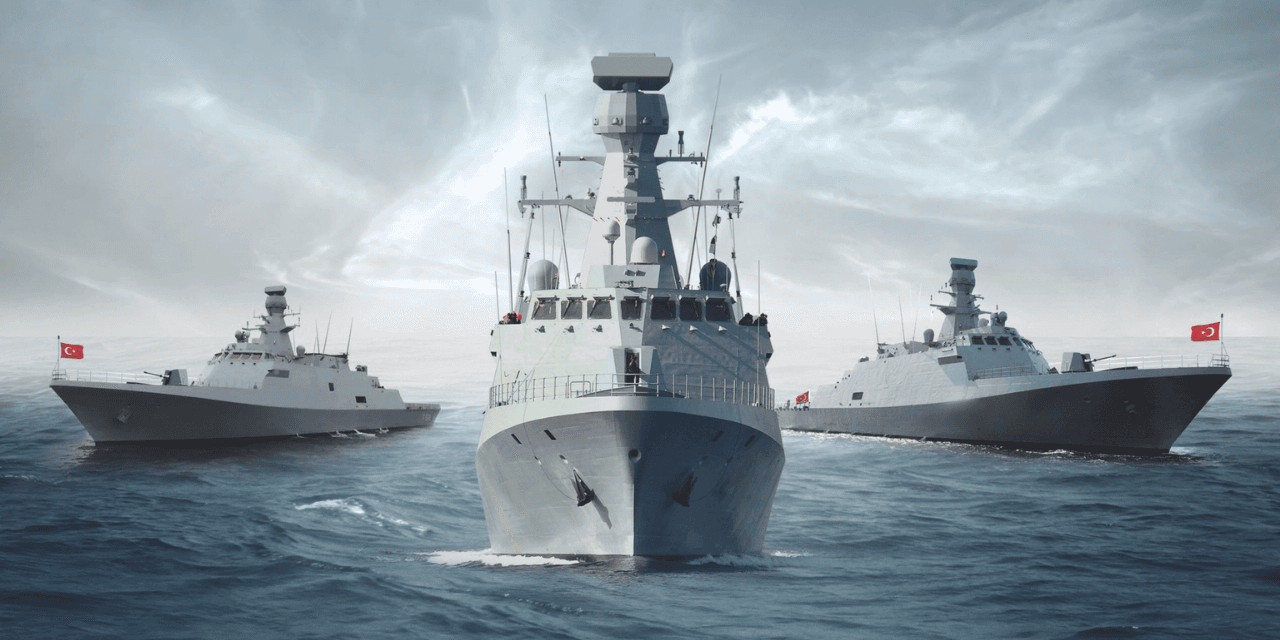
Projects such as the MİLGEM corvettes, next-generation submarines, and enhanced mine countermeasure capabilities have steadily increased Türkiye’s maritime weight. The launch in 2025 of the TF-2000 air-defence destroyer, the MUGEM-class aircraft carrier, and the MILDEN-class submarine programmes signals long-term strategic ambition. Exercises such as Nusret-2025, which reinforced Türkiye’s leadership in mine warfare, further consolidate this trajectory.
Yet the Black Sea’s economic and legal dimensions are just as consequential as its military ones. Energy pipelines, LNG shipping, offshore gas exploration, and critical trade routes — most notably the grain corridor — are central to Türkiye’s economic security. Since being restructured under the March 2025 agreement, the grain corridor has enabled exports exceeding 33mn tonnes in a single year. However, persistent drone attacks have increased its vulnerability.
Türkiye’s refusal to accept Russia’s re-flagging manoeuvres under the Montreux framework reflects a commitment to legal consistency. At the same time, the mine-clearing task force established with Romania and Bulgaria has emerged as a vital model of regional cooperation. Expanded in August 2025, the initiative has taken on a broader mandate, including patrols to protect energy infrastructure. Operations such as the destruction of Sea Baby drone wreckage in December 2025 demonstrate its tangible impact.
Still, the November 2025 tanker attacks drove up insurance premiums, raising the cost of trade and turning the Black Sea into a focal point of economic vulnerability. The political economy of the war is now inseparable from maritime insecurity.
Today, the Black Sea is no longer just a regional conflict zone. It has become a geopolitical multiplier — increasing Türkiye’s responsibilities while expanding its diplomatic room for manoeuvre. As maritime security, energy corridors, and trade flows grow more contested, Türkiye’s strategic position is set to become even more consequential.
Ankara’s multi-layered approach — combining military deterrence, maritime law, commercial security, and energy diplomacy — is likely to remain a defining force in the Black Sea’s evolving geopolitics. In a region where power is increasingly fluid, Türkiye has positioned itself not merely as a gatekeeper, but as a central strategic actor.