İlgili Yayın Dosyaları
Evaluation Note / Nilgün Arısan Eralp
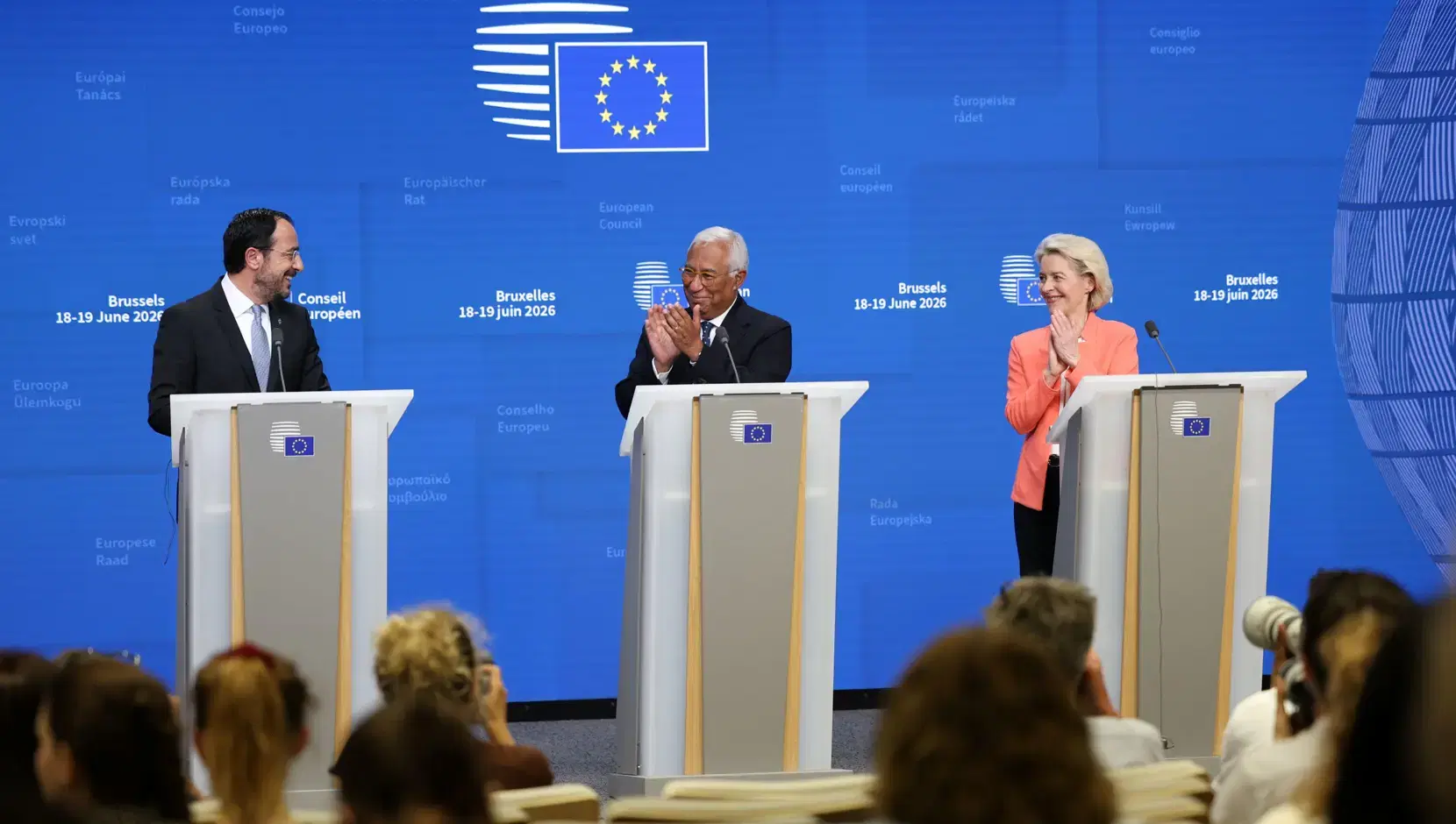
Cyprus assumed the rotating Presidency of the Council of the European Union in the first half of 2026, fourteen years after its first presidency in 2012. Although the Cyprus issue was not formally included on the Presidency’s agenda, as the rotating presidency is expected to act as an impartial broker, President Nikos Christodoulides nevertheless pursued two seemingly contradictory objectives during Cyprus’s tenure. First, he sought to deepen regional partnerships in the Eastern Mediterranean in ways that, from Ankara’s perspective, reinforced perceptions of strategic encirclement. Second, he sought to further the Europeanisation of the Cyprus problem by promoting its treatment as a European, rather than merely a bilateral or UN-led, issue.
Developments that reinforced Turkey’s perception of being strategically encircled.
During Cyprus’s EU Presidency, cooperation under the 3+1 (Cyprus–Greece–Israel–United States (US) framework that was created in 2019 continued to deepen, particularly in the fields of defence, maritime security, energy security, and regional stability. Although the mechanism is not a formal military alliance, it has become an important platform for strategic coordination among the four partners in the Eastern Mediterranean.
During Cyprus’s EU Presidency in the first half of 2026, the US- Cyprus Roadmap for Bilateral Defense Cooperation (2024–2029) continued to serve as the strategic framework for expanding bilateral defence ties. The roadmap seeks to strengthen military interoperability, broaden joint training and exercises, enhance maritime security, humanitarian assistance, and crisis response capabilities, and deepen cooperation in areas such as intelligence sharing, cybersecurity, countering malign influence, and addressing the security implications of climate change. More broadly, it reflects the growing strategic partnership between Washington and Nicosia and underscores Cyprus’s increasing importance in U.S. security policy in the Eastern Mediterranean.
The trilateral military cooperation agreement, signed between Cyprus, Greece and Israel in December 2025, shortly before Cyprus assumed the Presidency of the Council of the European Union, continued to be implemented during the first half of 2026. The agreement has provided the institutional framework for a broad range of defence activities, including joint military exercises, naval cooperation, special forces training, staff exchanges, operational planning, and intelligence sharing.
During the first half of 2026, Cyprus and Egypt further strengthened their strategic partnership in the energy sector. On 30 March 2026, on the sidelines of the EGYPES 2026 conference in Cairo, the two countries signed a framework agreement covering the development of the Cronos and Aphrodite offshore gas fields. The agreement establishes the basis for transporting Cypriot natural gas to Egypt for processing, liquefaction, and re-export to international markets, while further integrating the two countries’ energy infrastructure and reinforcing their strategic cooperation in the Eastern Mediterranean.
Another major development during Cyprus’s EU Presidency was the signing of a Status of Forces Agreement (SOFA) between France and the Republic of Cyprus on 8 June 2026, marking a significant milestone in their bilateral defence partnership. The agreement establishes the legal framework governing the temporary deployment of French military personnel to Cyprus, facilitates the use of Cypriot military facilities for logistical and operational purposes, and expands cooperation in areas such as joint military exercises, air defence, maritime security, military mobility, logistics, defence technology, and operational readiness.
Finally, on 12 June 2026, Cyprus, Greece, Israel, and the United States formally established the Eastern Mediterranean Energy Center (EMEC) in Houston during the ministerial meeting of the 3+1 Energy Dialogue and agreed to develop a joint roadmap for future energy cooperation. The establishment of EMEC aims to promote cooperation on energy security, critical infrastructure, technological innovation, and regional energy governance, thereby further institutionalising the strategic partnership among the four countries. Beyond its energy dimension, the initiative also strengthened the broader framework of regional cooperation in the Eastern Mediterranean.
Another noteworthy development in recent months has been the Republic of Cyprus’s diplomatic outreach to the countries of Central Asia. The efforts to strengthen relations with member states of the Organization of Turkic States, particularly Kazakhstan, should not be viewed solely as an economic or diplomatic initiative. They also reflect an attempt by Cyprus to establish a political presence in a region traditionally regarded as falling within Turkey’s sphere of influence.
You may read evaluation note from here.
This note was published in ANKA Review on June 29-July 5 2026.