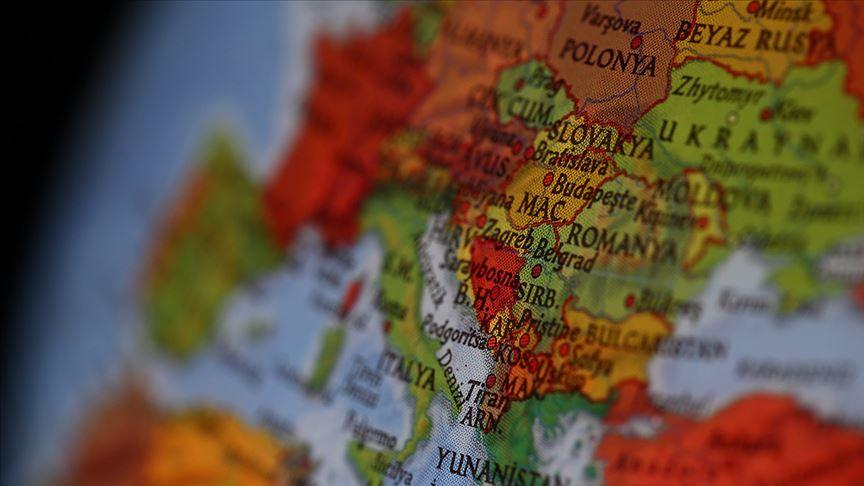
By the end of 2025, the Balkans is once again emerging as one of the most sensitive regions in Europe. The region is neither in a state of total crisis nor has it achieved lasting stability. On the contrary, the Balkans continue on their path in a state of “controlled but persistent fragility.” This fragility is shaped not so much by sudden conflicts as by prolonged political deadlocks, economic weaknesses, and pressures created by great-power competition.
Developments that challenge the functioning of state institutions in Bosnia and Herzegovina, the ongoing deadlock between Kosovo and Serbia, and months of anti-government protests in Serbia are the main drivers of instability in the region. While these problems may seem manageable when considered individually, when taken together, they once again make the Balkans a risk to European security.
The problems in the Balkans are not only political; perhaps more importantly, they have a deep economic dimension. Countries in the region have been experiencing intense migration for a long time. The migration of young and skilled populations toward Europe weakens state capacity. Infrastructure deficiencies, energy dependence, and limited production capacity also increase economic fragility.
The war in Ukraine has further exacerbated this situation. Rising energy and food prices are increasing social pressure in Balkan societies, while also turning economic problems into direct security risks. In this context, the economy in the Balkans is no longer just a matter of development; it must be seen as a direct issue of stability and security.
Indeed, following the war in Ukraine, the Balkans have returned to the center of Europe’s security architecture. The European Union has revived its enlargement rhetoric toward the region in response to these developments and announced a €6 billion economic package. However, the problem lies in the limited transformative effect of such packages in countries lacking political stability and the political will for reform.
On the other hand, the United States’ shift toward a more limited approach in the Balkans, prioritizing local ownership, increases Europe’s responsibility. Russia, meanwhile, seeks to maintain its sphere of influence by exploiting social and political fault lines rather than through direct intervention. This broader picture shows that the Balkans continue to function as a quiet yet effective arena of competition among the great powers.
It is precisely at this point that Türkiye’s role in the Balkans comes to the fore. Türkiye is one of the few actors in the region capable of simultaneously leveraging security, economic, and diplomatic tools. Türkiye’s resumption of command of the NATO force in Kosovo has strengthened Ankara’s balancing role on the ground. This military presence not only provides security but also serves as a deterrent that helps prevent conflict.
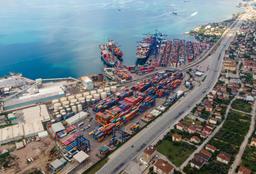
Türkiye’s presence in the Balkans is also notable in the economic sphere. Approximately $20 billion in investment and a trade volume of $35 billion have made Türkiye a partner that generates tangible benefits for Balkan countries. Investments by Turkish companies, ranging from banking and infrastructure to energy and retail, contribute not only to economic growth but also to social stability.
On the diplomatic front, new regional dialogue initiatives spearheaded by Türkiye demonstrate that problems in the Balkans can be addressed through intra-regional mechanisms rather than external intervention.
Türkiye’s perspective on the region differs from that of many other actors. Ankara approaches the Balkans not through the narrow lens of the “Western Balkans,” but as a historical, cultural, and geographical whole. At the core of this approach lies a simple but critical principle: regional solutions to regional problems. In this sense, Türkiye continues to be an actor that prevents crises from escalating into conflicts rather than one that intervenes only after crises erupt. The multidimensional policy pursued to date has enabled the country to play this role.
Realistically, the Balkans do not appear likely to achieve full stability in the short term. However, this does not mean that the region is inevitably headed for crisis. Although existing security mechanisms may appear inadequate, crises are currently being kept under control thanks to balanced diplomacy.
While the future of the Balkans remains uncertain, Türkiye’s balanced and inclusive approach in the region continues to be an important stabilizing factor—not only for the Balkans, but also for European security.