Vulnerability to External Financial Shocks: The Case of Turkey
For many observers, Turkey's performance during the "2007+ global financial crisis" was puzzling. In the first half of the 2009, Turkey was one of the worst affected countries in the world. In addition, the Turkish government was too slow to react, and the measures taken seemed inadequate. The purpose of this paper is to answer the following two questions: First, why was Turkey affected so much by the crisis? And second, why was the government's reaction late and "less than adequate"? The paper is organized as follows: In the following section the concept of vulnerability is briefly discussed. The second section is devoted to another methodological issue. Here a simple framework is introduced to analyze the channels and the manner in which a shock such as the 2007+ crisis affects an economy. In the third section, Turkey's experience with the 2001 crisis is discussed. The purpose of this section is to give some historical insight to explain why the government was confident (even over-confident) of Turkey's resiliency. The fourth section briefly surveys the developments in the Turkish economy after it was hit by the global crisis in the last quarter of 2008. In the fifth section, in the light of these discussions, the government's reaction is analyzed. In this section the emphasis is on the uncertainty that the 2007+ crisis had created. Therefore it is assumed that the government was taking decisions under complete uncertainty. A simple framework is introduced to show that a rationale can be attributed to the government's behavior. The paper concludes with the evaluation of the government's decisions.
Working Paper is available for download on the ERF website, please click here
Haber
Working Paper/Hasan Ersel
Vulnerability to External Financial Shocks: The Case of Turkey For many observers, Turkey's performance during the "2007+ global financial crisis" was puzzling. In the first half of the 2009, Turkey was one of the worst affected countries in the world.
Paylaş
Diğer Haberler
Haber
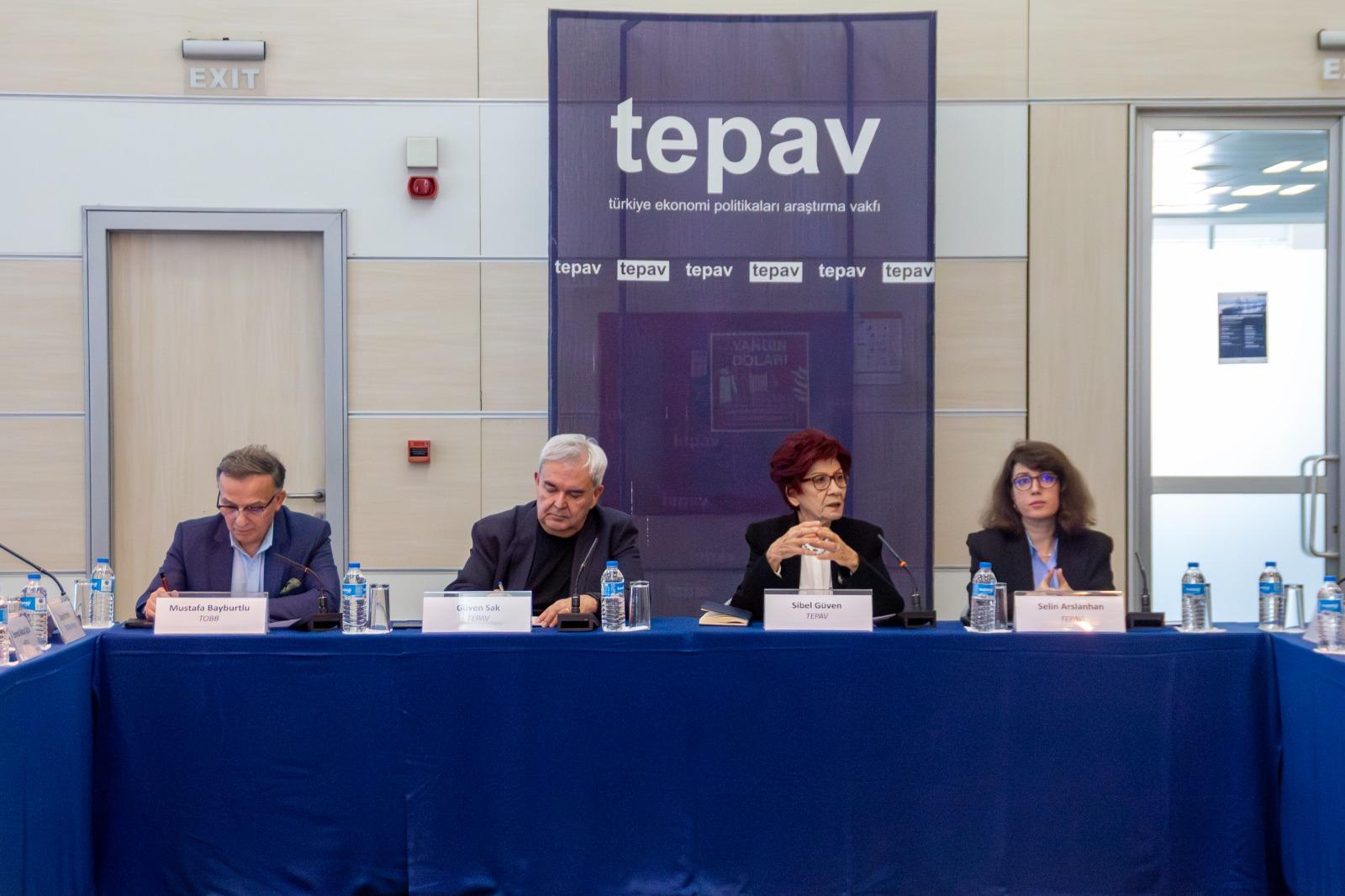
Türkiye, üretim gücünü “Made in Europe” müzakerelerine nasıl bir hazırlıkla taşımalı?
TOBB ve TEPAV iş birliğinde hazırlanan “‘Made in Europe’ Politikalarının Türkiye’nin İmalat Sanayi Ticaretine Olası Etkilerinin Analizi” başlıklı raporun tanıtıldığı…

Haber
Ebru Voyvoda: Türkiye’nin iklim taahhütleri karbon bütçesiyle uyumlu mu?
TEPAV’ın COP31 özel yazı dizisinde Prof. Dr. Ebru Voyvoda, Türkiye’nin iklim taahhütlerini karbon bütçesi ve tarihsel sorumluluk üzerinden değerlendiriyor. Net sıfır…

Haber
İklim krizi ve toplumsal dirençlilik: Eleştiri ile dönüşüm arasında
Değerlendirme Notu / A. Burak Büyükcivelek