The United Nations was founded to save succeeding generations from the scourge of war. Today, as conflicts multiply, geopolitical rivalries deepen and confidence in multilateralism erodes, the gap between the Organization’s founding mission and its ability to fulfil it has become increasingly evident. The challenge is no longer simply to defend the United Nations as an indispensable institution, but to restore its capacity to deliver on the purposes for which it was established.
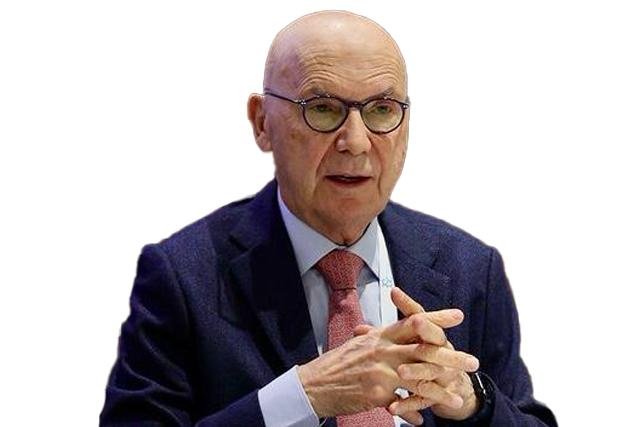
Türkiye’s nomination of Ambassador Feridun Sinirlioğlu for Secretary-General offers an opportunity to address this challenge. His candidacy rests on a compelling proposition: that the United Nations can regain its effectiveness and credibility through principled diplomacy, independent leadership and meaningful institutional reform. With more than four decades of diplomatic experience, including service as Türkiye’s Foreign Minister and his present position as Secretary General of the OSCE, Sinirlioğlu brings an understanding of both the political realities that constrain international cooperation and the diplomatic possibilities that remain open. His candidacy is therefore significant not merely as a reflection of his personal qualifications, but as an opportunity to consider what kind of leadership the United Nations needs at this critical juncture. The central question is whether the next Secretary-General can bridge the widening divide between the principles of the Charter and the realities of international politics, while restoring confidence in the Organization’s ability to prevent conflict, protect human dignity and advance global prosperity. Sinirlioğlu’s vision statement provides a substantive basis for that debate. Its emphasis on preventive diplomacy, impartiality, cooperation with regional organizations and institutional reform reflects a conviction that the United Nations must be both faithful to its founding principles and capable of adapting to a changing world.
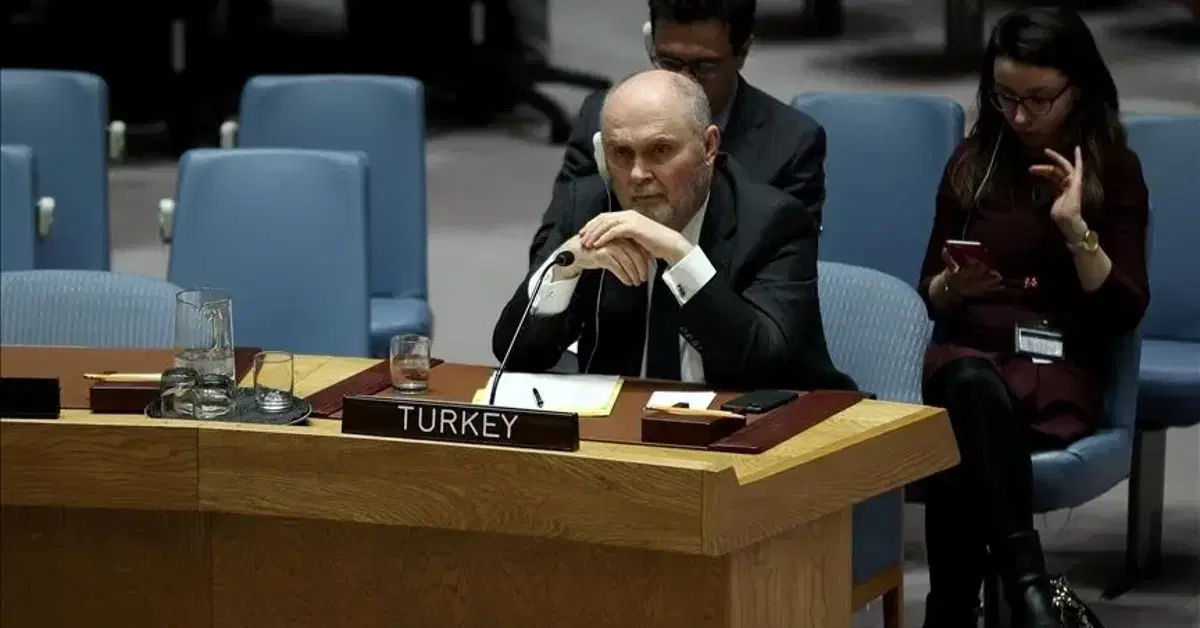
His diplomatic career has been closely connected to multilateral diplomacy. He served as Türkiye’s Foreign Minister in 2015, Undersecretary of the Ministry of Foreign Affairs, and Permanent Representative to the UN from 2016 to 2023. In 2023, the UN Secretary-General appointed him Special Coordinator for the independent assessment on Afghanistan mandated by Security Council Resolution 2679. Since December 2024, he has served as Secretary General of the OSCE. His career has taken him across the Middle East, Europe and the United Nations, exposing him to the constraints of the Security Council, the responsibilities of national foreign policy and the demands of leading a regional organization whose participating States hold different strategic outlooks.
The first priority in his vision is conflict prevention and resolution. Sinirlioğlu emphasizes the Secretary-General’s good offices, preventive diplomacy, early warning, mediation and peacebuilding, alongside cooperation with regional organizations. His conviction that engagement with adversaries is a responsibility rather than a concession is especially pertinent in a period of acute mistrust. A Secretary-General cannot substitute for governments’ political will or reconcile incompatible interests. The office can, however, help reduce miscalculation, maintain communication and create space for political solutions. The challenge is to turn that potential into sustained diplomatic action. The second priority is restoring confidence in multilateralism by making the UN a forum in which large and small states can participate on equal terms. Sinirlioğlu highlights the needs of least developed countries, landlocked developing countries and small island developing states. Multilateral legitimacy depends not only on the engagement of powerful states, but also on whether vulnerable countries see the Organization as responsive to their circumstances. His call for stronger partnerships between the UN and regional organizations is equally significant. Regional bodies bring contextual knowledge and access, while the UN provides universal legitimacy. Such cooperation can strengthen the international response to crises, provided that responsibilities are clearly defined and the principles of the Charter are respected.
The statement also addresses emerging technologies, sustainable development, climate action and institutional reform. It calls for international frameworks governing artificial intelligence, biotechnology, cybersecurity and outer space, while reaffirming the Sustainable Development Goals and the need to reduce inequalities. Together, these priorities recognize the interdependence of security, development and human rights. They also raise difficult questions about global governance, development finance and the protection of essential field operations during institutional reform. On reform, Sinirlioğlu draws on his experience at the OSCE, where he has pursued institutional streamlining that included an 11 per cent budget reduction, the closure of redundant structures and efforts to reduce duplication. This provides a concrete basis for examining his approach to institutional management. The test for UN reform will be whether greater efficiency translates into improved delivery and accountability while protecting essential mandates, expertise and operational capacity. Reform must strengthen the Organization’s ability to serve people, not diminish it. The objective should be a United Nations that is more effective in carrying out its responsibilities, not simply a smaller one.
The next Secretary-General will be judged less by the breadth of a programme than by the ability to translate it into credible action. The UN needs a leader who can listen, mediate, explain institutional limitations honestly and exercise the authority of the office without overstating it. It also needs sustained attention to all three pillars of its work: peace and security, development, and human rights. Sinirlioğlu’s candidacy places diplomacy, regional cooperation and institutional reform at the centre of the debate. His record offers Member States substantial experience to examine, while his vision statement sets out an agenda whose feasibility and priorities deserve serious consideration.
The larger question is whether governments are prepared to equip the United Nations to fulfil the mission entrusted to it in 1945. The selection process should provide an opportunity to debate that question seriously and assess every candidate against the same standards: fidelity to the Charter, independence, practical leadership and service to humanity.